Water Extraction Emergency Water Extraction Tap & Call Now (877) 718-2514

Mold Removal in Gilbert, AZ Reach out to us today for immediate mold removal and mold remediation services in Gilbert, AZ.

Call now for mold mitigation, removal, and remediation services: control the moisture conditions behind the growth, address affected materials, and remove visible mold.

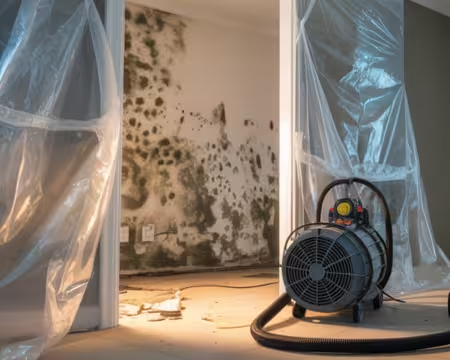
Mold remediation work in an affected indoor area

Mold Mitigation, Removal, and Remediation Services

Professional Mold Removal and Remediation in Gilbert, Arizona

Mold grows where moisture remains. Removing visible growth without addressing the moisture source can leave the conditions that allowed the problem to develop and increase the risk of future mold growth.

If standing water or wet materials are still present, water removal or structural drying may be needed before or alongside mold remediation to help eliminate the moisture conditions that support mold growth.

Remediation begins by defining the affected area, identifying the materials involved, and checking for current or previous moisture. Suitable surfaces may be treated and dried, while mold-affected porous materials may require controlled removal.

Mold Removal and Remediation Services

Professional Mold Removal and Remediation Services

Complete mold removal and remediation services for affected rooms, surfaces, and materials, from assessment and containment through controlled removal, cleaning, moisture control, and drying when appropriate.

  • Residential Mold Remediation

    Mold remediation for affected rooms, walls, ceilings, cabinets, flooring areas, and other accessible materials inside homes.

  • Mold Assessment and Moisture Inspection

    Review of visible growth, staining, odors, moisture conditions, affected materials, and nearby areas that may require attention.

  • Mold After Water Damage

    Remediation for mold that develops after leaks, flooding, overflows, appliance failures, or materials that remained wet.

  • Mold Remediation for Drywall and Wall Areas

    Evaluation and controlled removal or cleaning for affected drywall, baseboards, framing surfaces, and accessible wall areas.

  • Mold Remediation for Ceilings and Upper Areas

    Remediation for accessible ceiling and upper-wall materials affected by roof leaks, plumbing from above, or condensation.

  • Mold Remediation for Cabinets and Vanities

    Assessment and remediation around cabinets, sink bases, vanities, toe kicks, and enclosed areas affected by recurring leaks.

  • Mold Assessment for Carpet and Padding

    Evaluation of mold-affected carpet, padding, and nearby flooring materials to determine whether cleaning or removal is appropriate.

  • Crawl Space Mold Remediation

    Remediation for accessible crawl-space surfaces and materials affected by leaks, condensation, drainage problems, or elevated moisture.

  • Mold Remediation for Basement and Lower-Level Areas

    Mold remediation for accessible lower-level walls, framing, flooring areas, and materials affected by persistent moisture.

  • Mold Containment and Controlled Removal

    Isolation of the work area when appropriate, followed by controlled handling and removal of materials that cannot be cleaned effectively.

  • Moisture Control and Structural Drying

    Moisture checks, dehumidification, and drying support used to address damp conditions connected to the affected area.

Mold Removal in Gilbert

Visible Mold or a Persistent Musty Odor?

Call now for professional mold remediation services in Gilbert, AZ. We will evaluate the affected area and determine the appropriate cleanup and moisture-control steps.

Call Now (877) 718-2514

How Mold Remediation Works

What Happens During Mold Remediation

Every remediation project begins with identifying the moisture source and affected materials. From there, the work area is evaluated, contained when appropriate, cleaned or removed as needed, and dried before the final review.

  1. Find the Moisture and Define the Area

    Visible growth, staining, odors, damp materials, and known leak locations are reviewed to define the work area and identify moisture that still needs attention.

  2. Contain the Area and Begin Remediation

    The work area is controlled as needed. Materials that cannot be cleaned effectively are removed, while suitable remaining surfaces are cleaned according to their condition.

  3. Dry, Monitor, and Confirm Conditions

    Remaining materials are dried as needed, followed by a visual inspection and moisture verification related to the remediation scope.

Choosing the Right Starting Point

Wet Materials or Existing Mold Growth?

Wet materials need prompt moisture control before mold develops. Existing mold growth requires remediation. The correct starting point depends on what is present when the property is evaluated.

Before Mold Develops

Moisture Control and Drying

This work addresses water and damp materials before visible mold growth becomes the primary problem.

  • Remove standing and recoverable water
  • Measure moisture in affected materials
  • Use air movement and dehumidification
  • Monitor drying progress

If standing water or wet materials are present without visible mold, water removal or structural drying may be the appropriate service.

After Mold Has Developed

Mold Removal and Remediation

This work addresses existing mold growth, affected materials, and the moisture source or conditions that allowed mold to develop.

  • Define the affected area and material type
  • Use containment when appropriate
  • Remove or clean affected materials
  • Address moisture conditions that support mold growth

Painting over visible mold or cleaning only the surface does not address mold inside affected porous materials or the moisture source.

Common Moisture Sources

Common Causes of Indoor Mold Growth

Mold problems are connected to moisture. Finding the source helps determine whether the area needs water removal, drying, repairs by another trade, mold remediation, or a combination of services.

  1. Unresolved Plumbing Leaks

    Slow supply-line, drain, fixture, or appliance leaks can keep drywall, cabinets, flooring, and enclosed areas damp.

  2. Roof and Window Intrusion

    Water entering around roofing, flashing, windows, or exterior openings can affect ceilings, wall cavities, insulation, and framing surfaces.

  3. Water Damage Not Fully Dried

    Materials may remain damp beneath flooring, behind baseboards, inside cabinets, or within wall assemblies after the visible water is gone.

  4. Humidity and Condensation

    Recurring condensation or elevated indoor humidity can keep surfaces damp enough to support growth in poorly ventilated areas.

  5. Moisture Trapped in Porous Materials

    Drywall, wood products, carpet backing, and layered flooring can remain damp internally after the surrounding surfaces appear dry.

  6. Crawl Space or Lower-Level Moisture

    Drainage issues, plumbing leaks, condensation, and damp structural materials can create recurring mold conditions in lower or enclosed areas.

Local Mold Remediation Service

Mold Removal Across Gilbert Neighborhoods and Communities

Gilbert is our primary service area, with residential mold removal and remediation available across established neighborhoods, master-planned communities, and residential areas throughout the town.

Primary Service Area

Gilbert, Arizona

AZ

Call for mold affecting walls, ceilings, cabinets, flooring systems, crawl spaces, or other accessible materials in homes across Gilbert.

  • Gilbert
  • Gilbert Communities
  • Residential
  • Commercial

Provide the property ZIP when you call so service availability can be confirmed.

Gilbert Neighborhoods

Gilbert Areas We Serve

Mold Removal FAQ

Questions About Mold Removal and Remediation

Clear answers about mold remediation, visible growth, affected materials, moisture control, recurrence, and whether mold can go away on its own.

What is mold remediation?

Mold remediation is a controlled process used to define the affected area, address mold-affected materials, clean or remove materials according to their condition, and correct the moisture source or conditions that allowed the growth to develop.

Is wiping visible mold enough?

Not always. Surface cleaning may be appropriate for some hard, non-porous materials, but porous materials can retain mold growth beneath the visible surface. The moisture source must also be addressed so the area does not remain damp and support future growth.

Can moldy drywall be cleaned?

Drywall is a porous material, so the correct approach depends on the extent of the affected area, whether mold growth is limited to the surface, how long the material remained damp, and whether it has been damaged. Depending on its condition, affected sections may require controlled removal rather than surface cleaning.

Can mold come back after remediation?

Yes. Mold can return if the affected area becomes wet again or remains humid. Remediation addresses the existing affected materials, but leaks, drainage problems, condensation, ventilation issues, or other moisture sources should also be corrected to help reduce the chance of future mold growth.

Can mold in a house go away on its own?

No. Reducing moisture may slow or stop active mold growth, but it does not remove existing growth, staining, spores, or affected porous materials. If the moisture problem remains or returns, mold can begin growing again. The affected area should be evaluated, the moisture condition corrected, and materials cleaned or removed according to their condition.

Mold Removal Gilbert AZ

Visible Mold Inside Your Property?

Call now for mold removal and remediation in Gilbert. We will assess the affected area, identify the moisture conditions connected to the growth, and explain the most appropriate next step.

Call Now (877) 718-2514
Tap & Call Now: (877) 718-2514